Lead Generation Bottleneck Analysis That Works
- May 11
- 6 min read
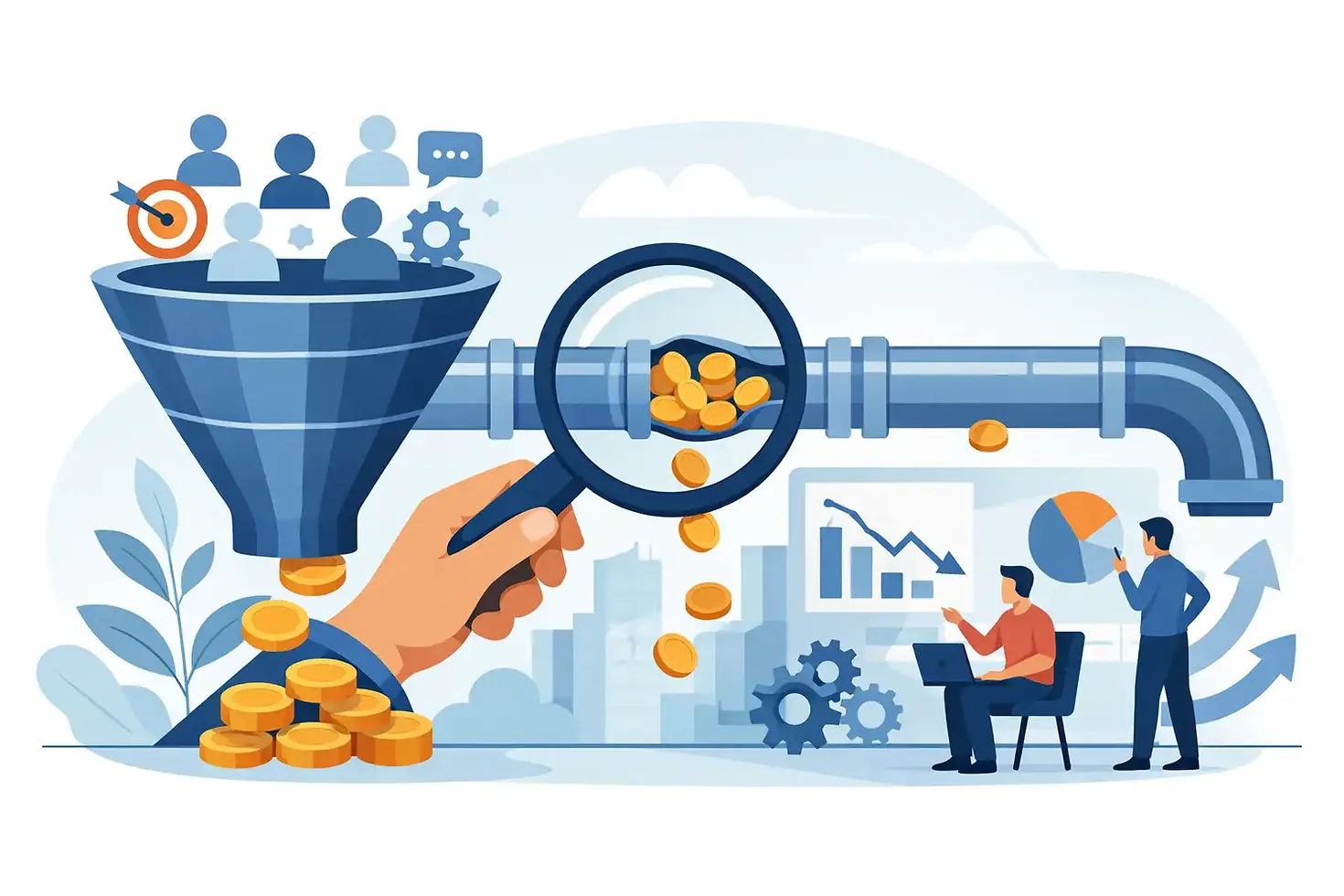
If your pipeline feels unpredictable, your first problem usually is not traffic. It is diagnosis. A proper lead generation bottleneck analysis shows where momentum actually breaks - before the click, on the page, in the follow-up, or inside the sales process itself. Without that clarity, most growth efforts turn into expensive motion that looks productive and fixes nothing.
That is why more campaigns often make the problem worse. You add ads, publish more content, hire another freelancer, or switch CRMs, but revenue still drags. The business gets busier, not healthier. Founder-led companies hit this wall all the time because the visible symptom is low lead volume, while the real constraint sits deeper in the system.
More Leads Won't Fix a Broken Funnel
The fastest way to waste money is to assume top-of-funnel volume is the issue. If visitors are arriving but not converting, more traffic compounds inefficiency. If leads are converting to calls but not to customers, ad spend only creates more weak opportunities for your team to chase. If leads are qualified but follow-up is inconsistent, the bottleneck is operational, not promotional.
This is where lead generation bottleneck analysis matters. It forces you to stop treating marketing and sales like separate departments and start looking at them as one revenue system. Every stage affects the next. Weak positioning lowers click-through rates. A weak offer lowers form fills. Slow response times kill booked calls. Poor sales qualification hurts close rates. Each leak creates pressure elsewhere.
Businesses rarely need more activity. They need to identify the one constraint creating the most downstream damage.
What a Lead Generation Bottleneck Analysis Actually Looks At
A real analysis is not a dashboard screenshot and a few opinions about ad creative. It is a structured review of the path from attention to revenue. The goal is to isolate where demand is getting lost and why.
Traffic quality
Sometimes volume is low because visibility is weak. Other times traffic exists, but it is the wrong traffic. High impressions and cheap clicks can still produce poor pipeline if messaging attracts bargain shoppers, unqualified buyers, or people outside your service area. Looking only at traffic counts hides this.
A better question is whether the right prospects are arriving with the right intent. If they are not, the bottleneck may be your targeting, channel mix, or market positioning rather than your website.
Conversion points
A surprising number of businesses send paid and organic traffic to pages that ask too much, explain too little, or create friction. The offer is vague. The headline sounds like everyone else. The form is too long. The next step is unclear. Mobile experience is poor. Trust signals are weak.
If people visit but do not act, the issue is often not awareness. It is conversion architecture. This is where messaging, UX, and offer strategy do the heavy lifting.
Lead handling and speed to contact
This is one of the most expensive blind spots in founder-led companies. A lead comes in, then sits. Or it gets a generic autoresponder and no real follow-up for a day or two. By then, the prospect has moved on, booked with a competitor, or gone cold.
Many businesses think they have a lead generation problem when they actually have a lead management problem. Response speed, routing, reminders, nurture sequences, and call booking systems directly affect revenue. If these are loose, your acquisition channels will always look weaker than they really are.
Sales conversion
Not every bottleneck sits in marketing. If booked calls are happening but deals are not closing, the issue may be offer structure, pricing logic, qualification standards, or sales process consistency. Some teams are taking too many bad-fit calls. Others are failing to create urgency or communicate value clearly.
That distinction matters. If the bottleneck is in sales conversion, fixing your ad account will not help.
The Metrics That Matter Most
You do not need fifty KPIs. You need a short chain of numbers that exposes where the drop-off becomes abnormal.
Start with traffic by channel, then move to landing page conversion rate, lead-to-appointment rate, appointment show rate, close rate, and customer value. In most businesses, one of these metrics is dramatically weaker than the rest. That weak point is usually where the real investigation should begin.
Context matters, though. A low landing page conversion rate may be acceptable if lead quality and close rates are high. A high conversion rate may still be a problem if it brings in low-intent leads who never buy. This is why isolated benchmarks can be misleading. Good analysis connects stage performance to revenue outcomes, not vanity metrics.
Why Founders Misdiagnose the Constraint
Founders are close to the problem, which is useful until it is not. When revenue slows, the instinct is to fix what is easiest to see. Traffic is visible. Ad results are visible. Website design is visible. But invisible friction inside handoff, qualification, and follow-up often causes more damage than any surface-level issue.
There is also a bias toward tactics. Businesses want the fix to be a new campaign, a better agency, or a redesigned homepage because those feel actionable. But a bottleneck is not a creative brainstorming problem. It is a systems problem. Until you identify the exact stage where performance breaks, every tactic is a guess.
That is why Sky Feather frames growth around diagnosis first. Without root-cause clarity, execution gets expensive fast.
Common Bottlenecks Hiding in Plain Sight
The most common bottleneck is weak positioning. If your market cannot quickly tell why you are different, better, or more relevant, everything downstream gets harder. Ads underperform. SEO traffic bounces. sales calls turn into price discussions. You do not have a lead problem. You have a clarity problem.
The second common bottleneck is an offer that does not match buyer intent. Businesses often ask for a major commitment too early. A cold prospect may not be ready for a full consultation, proposal, or sales call. In those cases, the path needs a better bridge - something lower friction that moves the buyer forward.
The third is follow-up inconsistency. This one is brutal because it creates the illusion that channels are failing when the real issue is execution after the form fill. No process, no reminders, no nurture logic, and no accountability means leads decay before sales ever gets a real shot.
The fourth is channel-channel mismatch. SEO, paid search, social ads, referrals, and outbound each produce different buying behaviors. If your landing experience and sales process treat all lead sources the same, conversion can stall even with decent traffic.
How to Run a Smarter Analysis
Start by mapping the full path from first touch to signed customer. Keep it simple. Where does traffic come from, where does it land, what action is expected, how is the lead handled, and what has to happen for revenue to be created?
Then look for the sharpest drop between stages. That is your suspect bottleneck. From there, review the inputs around that stage. If form fills are low, assess the offer, message match, page clarity, trust, and friction. If appointments are low, inspect speed to lead, call-to-action strength, and automation. If close rates are low, review lead quality, qualification, and sales structure.
Do not try to optimize everything at once. That is how businesses create noise and lose the signal. One bottleneck fixed well often improves multiple metrics downstream.
Also, be honest about trade-offs. Tightening qualification may lower lead volume while increasing close rates and profit. Adding automation may improve speed but feel less personal unless it is designed carefully. Shorter forms can lift conversions but reduce data quality for sales. Better systems come from choosing the right trade-off, not pretending there are none.
What Happens After You Find the Bottleneck
Once the true constraint is clear, the work becomes more straightforward. If the issue is demand quality, tighten targeting and sharpen positioning. If conversion is weak, rebuild the page around one audience, one offer, and one next step. If follow-up is the gap, install automations, response standards, and ownership. If sales is the issue, improve qualification and the structure of the conversation.
The key is sequencing. Fix the primary constraint before scaling acquisition. Otherwise you pour more volume into a system that cannot carry it.
That is the part many businesses resist because it is less exciting than launching something new. But predictable growth usually comes from removing friction, not adding complexity.
A good lead generation bottleneck analysis gives you something most companies are missing: confidence about where to act next. Not more random marketing activity. Not another month of guessing. Just a clear path to better revenue performance with fewer wasted moves.
If growth feels heavier than it should, that is usually a signal. Somewhere in the system, one constraint is doing more damage than the rest. Find that first, and the next decision gets a lot easier.


%20copy.webp)
Comments